Docker Rebrand 2026: New Logo, Colors, and Strategy Explained
Docker’s 2026 rebrand shifts its story toward trusted execution for AI agents. A Docker Captain shares what changed and announces three books.
New Docker. New whale. New mission. 🐳
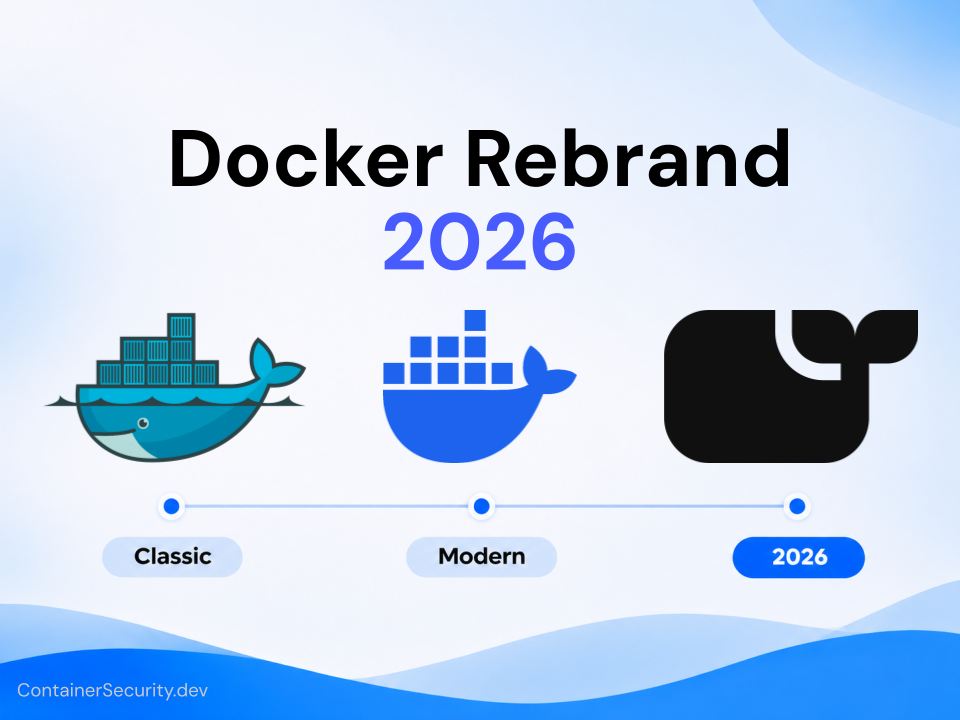
On November 19, 2026, Docker introduced its new brand identity, including a redesigned logo, a new color palette, and a bigger strategic ambition. You can check the official brand guidelines here: Docker brand guidelines.
Docker also revamped the whole website, and it looks darker and more Gothic, which I like:
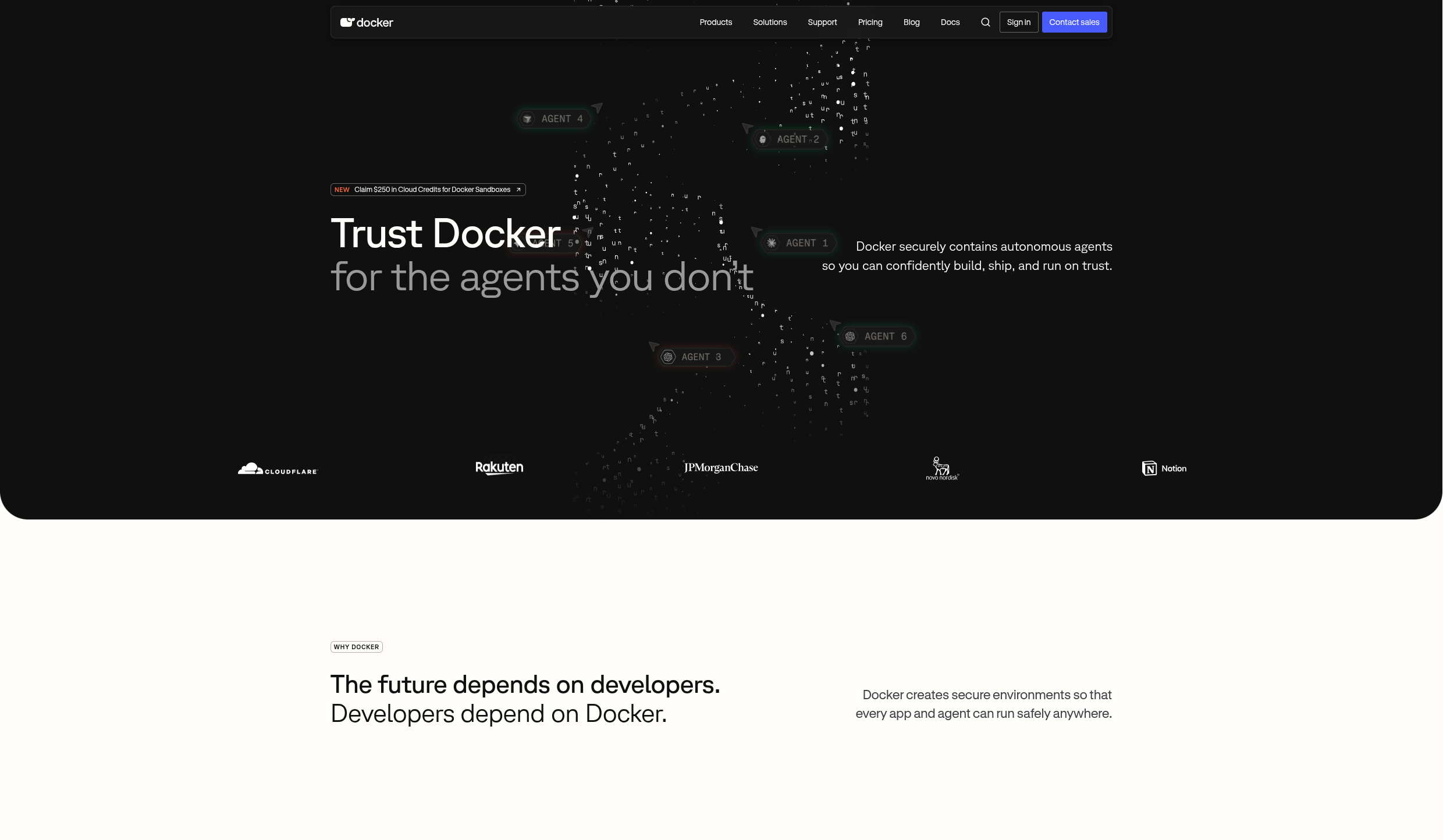
The message? Run on Trust.
As a Docker Captain and container security author, I have a few thoughts. And some book announcements of my own!
1. Docker's Angle: From Containers to Containment
Docker became famous for making applications portable and reproducible. Now, with autonomous AI agents entering development workflows, Docker is positioning itself as the trusted execution layer for both applications and agents.
We need to containerize the application and contain the agent.
What changed?
| Old Docker | New Docker (2026) | |
|---|---|---|
| Logo | Whale carrying containers | Simplified whale and containment symbol |
| Signature color | Docker Blue #2496ED | Base Blue #475BFF |
| Core message | Build, Ship, Run | Run on Trust |
| Main focus | Containerization | Trusted execution and containment |
| Workloads | Applications and services | Applications and autonomous AI agents |
| Audience | Primarily developers | Developers, enterprises, and AI builders |
| Security story | Container and supply-chain security | Trusted runtime, supply chain, and ecosystem |
Docker isn't abandoning containers. It's extending the principles that made containers successful into the AI era.
The new Docker colors
The familiar bright blue gets a more violet-toned replacement, supported by neutral backgrounds and vivid accents.
| Color | Hex | Purpose |
|---|---|---|
| 🔵 Base | #475BFF | Primary brand blue |
| 🟠 Launch | #FF6A3D | Energetic accent |
| 🟢 Flux | #00E476 | Bright accent |
| 🔴 Trigger | #FF3D40 | Strong emphasis |
| ⬜ Canvas | #F5F2EE | Warm neutral background |
| ⬛ Ether | #101010 | Dark foundation |
| ⬛ Ink | #1D1D1D | Text and neutral elements |
Typography changes too, with GT Planar as the primary typeface and GT Standard Mono for technical accents.
New words, new priorities
Docker's new messaging centers on three pillars:
- Trusted Runtime: Isolate and run autonomous agents safely.
- Trusted Supply Chain: Protect the software and dependencies those agents use.
- Trusted Ecosystem: Bring tools, models, and security controls together.
Two phrases capture the direction particularly well:
Trust Docker for the agents you don't.
Contain your agents, not your ambition.
This is an interesting shift. Containers made software portable. Sandboxes aim to make autonomous execution controllable.
And the whale? He's still here.
Back in October 2013, Docker's community named its whale Moby Dock, a playful reference to Herman Melville's 1851 novel Moby-Dick. Captain Ahab spent that story hunting a whale.
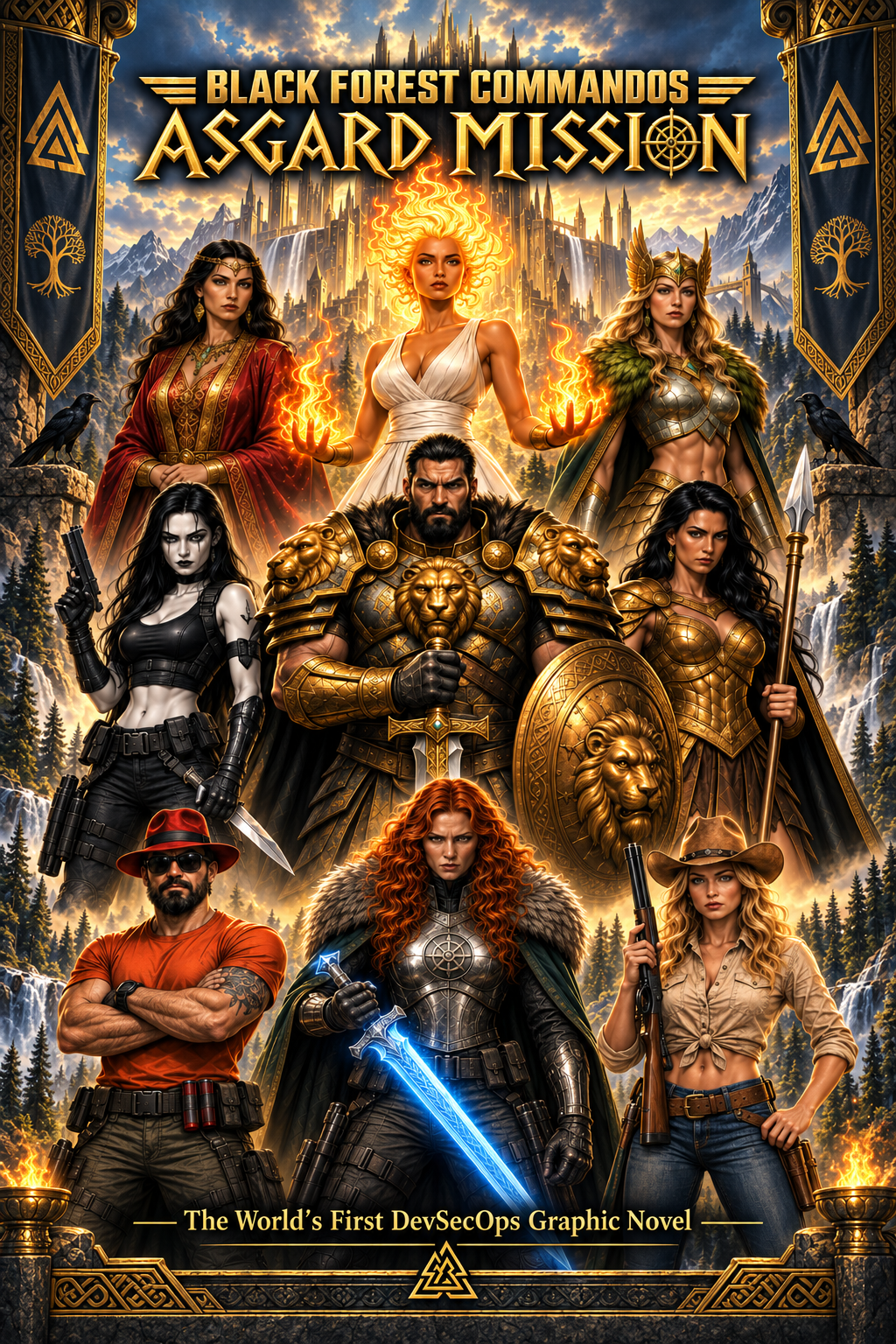
Thirteen years later, Docker's whale has evolved again. Sorry, Captain Ahab. But don't worry: Captain Ahab is still around, too. He's a character in my comic book Black Forest Commandos: Asgard Mission.
2. My Angle: New Docker, New Books
As a Docker Captain, I've spent years helping developers secure their containers, supply chains, and Kubernetes environments.
Docker's new direction fits what I've been working on throughout 2026: Security for both containers and autonomous agents.
And I have three books to talk about.
| Book | Status | What's changing? |
|---|---|---|
| Black Forest Shadow 2.0 | Released November 13, 2026 | 194 full-color pages, three new DLCs, updated security lessons |
| Docker Sandboxes (SBX) | In development | A standalone, hands-on guide to isolating AI agents |
| Docker and Kubernetes Security 2.0 | Planned for early 2027 | A substantive second edition with refreshed branding and security content |
Black Forest Shadow 2.0: The Shadow Returns 🌲
On Friday the 13th of November, I released the second edition of Black Forest Shadow, my dark fantasy guide to Docker and Kubernetes security.
The new edition expands from 143 to 194 pages, adds three bonus stories, upgrades the illustrations to full color, and updates the technical lessons with Docker Sandboxes, SIP (Security Immediate Plan), and recent supply-chain attacks.
Even in the Black Forest of 1865, security threats keep evolving.
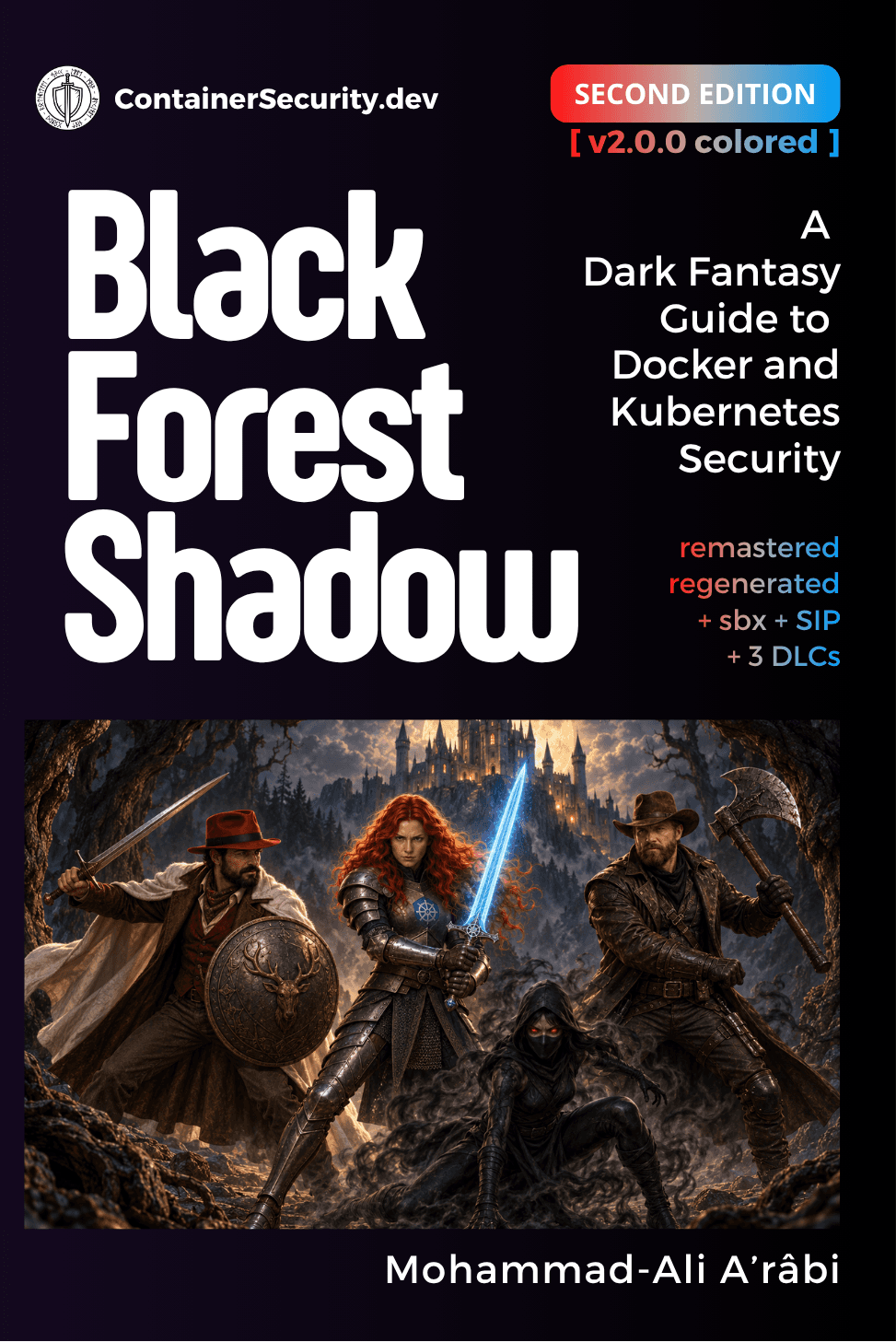
Black Forest Shadow 2.0: The Shadow Returns
Black Forest Shadow 2.0 expands to 194 full-color pages with three DLCs, Docker Sandboxes, SIP, and updated Docker and Kubernetes security lessons.
containersecurity.dev
Docker Sandboxes: Contain, Don't Just Containerize 📦
My next book focuses entirely on Docker Sandboxes (sbx).
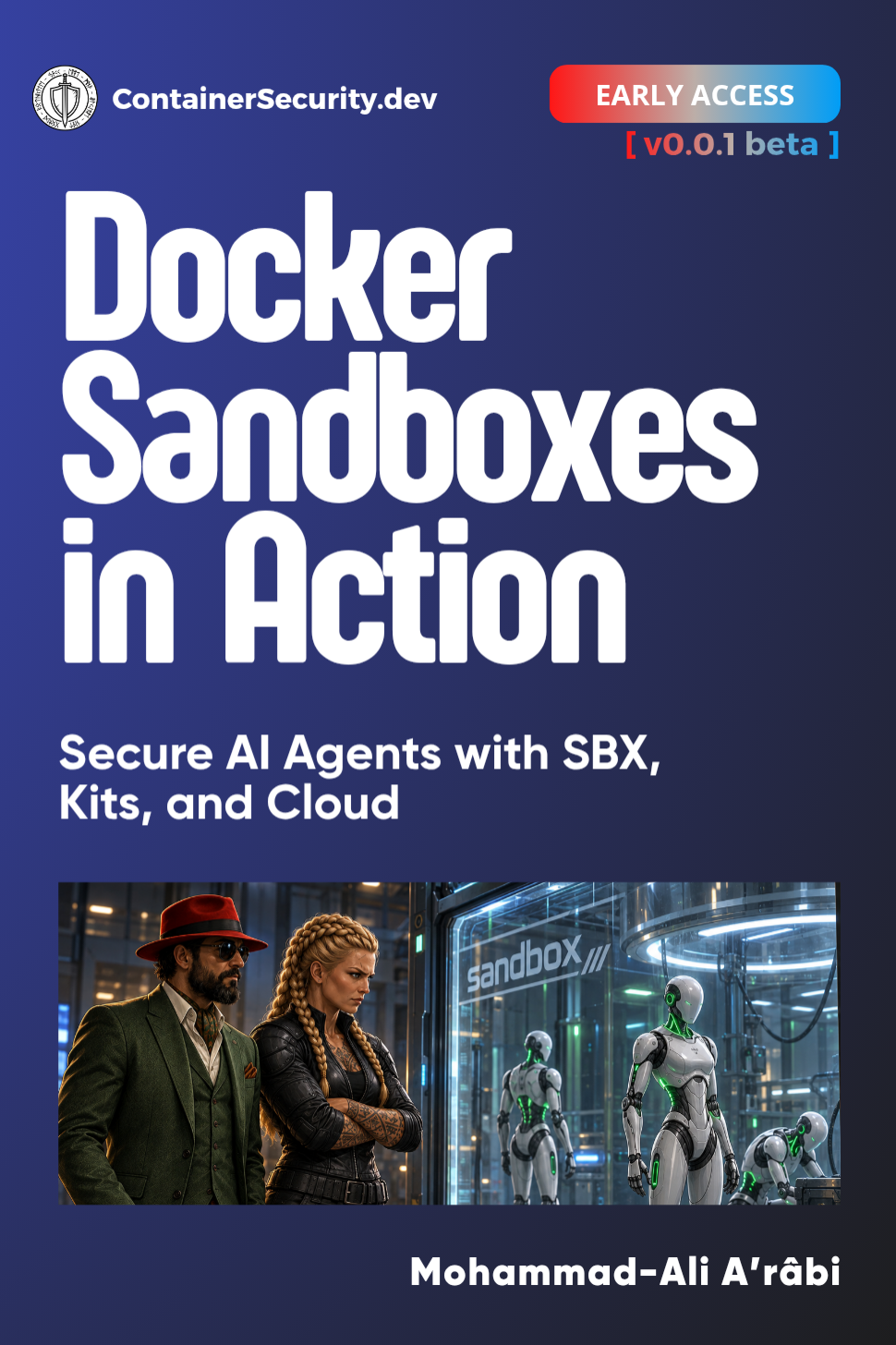
I'll cover agent isolation, sandbox architecture, networking, credentials, Kits, reproducible development environments, and the trade-offs between containers and sandboxes.
The fun part? I'm using Docker Sandboxes as the development environment to build the book itself.
The first chapters are already taking shape, with technical reviews and collaborations planned.
Want to do a sneak peek? You can check the early chapters on Leanpub:
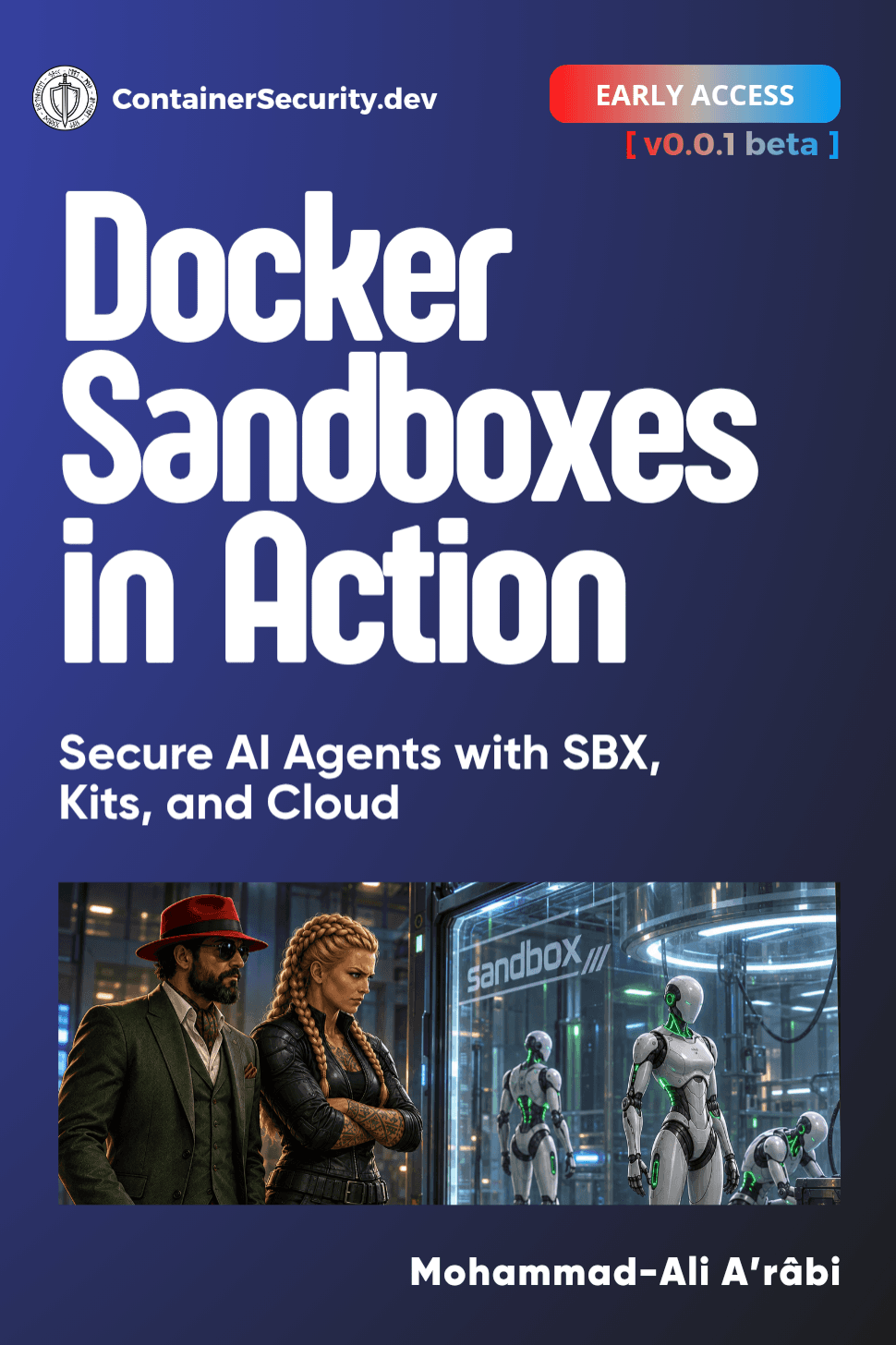
Docker Sandboxes (SBX) v0.0.1
Early chapters of Docker Sandboxes (SBX) are available on Leanpub.
leanpub.com
Docker and Kubernetes Security 2.0 🐳
Finally, I'm announcing the upcoming second edition of Docker and Kubernetes Security, planned for early 2027.
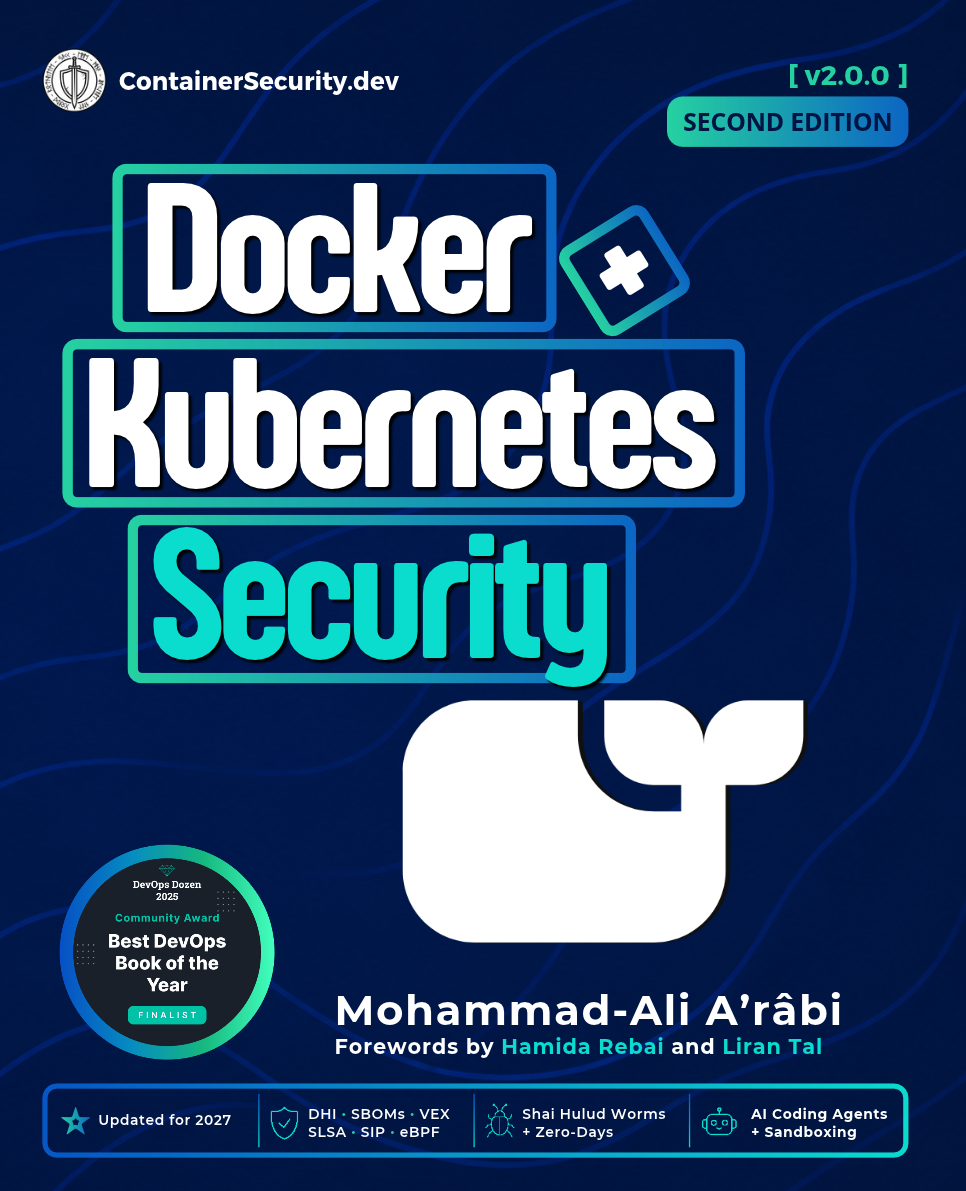
The first edition covered the security lifecycle from container images to Kubernetes runtime protection. The second edition will revisit that foundation in light of evolving supply-chain attacks, hardened images, attestations, and autonomous development workflows.
It will also feature a redesigned cover aligned with Docker's new identity.
Not merely a new logo on an old book. A proper second edition.
Docker is changing how it presents itself to the world, and I'm excited to see where its focus on trusted execution leads.
One thing hasn't changed: Secure software still needs boundaries, evidence, and practical controls.
Contain your agent, containerize your application, and drink good coffee while you do it (I recommend beans from Ethiopia):
Run on Trust.
Characters in this entry

The Valkyrie
The ancient warrior who turns the Black Forest Commandos' security strategy into checkpoints, access control, and frontline defense.

Rothütle
The Black Forest scholar and technical specialist who turns strange security concepts into battlefield solutions.

Captain Ahab
The veteran navigator and command-support officer who takes responsibility when a mission enters uncharted waters.